German retailers are supporting sustainable development of Myanmar’s textile industry. The partnership will initially run for three years. The core of the project is the creation of structures which enable a sustainable textile production with fair working conditions. Through training and seminars local textile producers will be encouraged to improve their standards, productivity and product quality.
Economic and development cooperation will work together to improve the supply chain’s social standards. The ultimate aim is to help Myanmar’s garment industry compete in the global market.
Myanmar has not only ambitious growth targets for its textile industry but wants to make this growth sustainable. By 2024, the textile industry in Myanmar is targeting a revenue of $10 billion. Currently exports of the textile industry are at about $1.8 billion.
Germany is Myanmar’s principal trading partner in the European Union. Germany’s main imports from Myanmar are garments and its principal exports to Myanmar are machinery, data processing equipment, electrical and optical goods, chemical products, motor vehicles and vehicle parts and pharmaceutical products. Of Myanmar’s garment exports, woven garments have driven the growth of exports while exports of knit products have been flat over the years.

- 1
- 2
- 3
- 4
- 5
- 6
- 7
- 8
- 9
- 10
Circularity as Strategy: BRICS countries turn waste into competitive advantage
The global fashion industry’s long-standing take-make-dispose model is being reset as BRICS economies increase their transition toward circular production systems.... Read more
Amazon’s €15 bn bet on France and the future of commerce
As Europe’s luxury sector enters a phase of austerity, a parallel transformation is unfolding in the continent’s retail foundations. What... Read more
Global Sourcing Expo Sydney 2026: Bridging the gap in global apparel procurement
The upcoming Global Sourcing Expo Sydney, scheduled for June 16–18, 2026, at the International Convention Centre (ICC) Sydney, is poised... Read more
Zara’s precision retail model leaves global competitors drowning in inventory
The global apparel sector is currently grappling with a punishing inventory overhang, yet Inditex, the parent company of Zara, has... Read more
Beyond the mall collapse, the profit push driving 2026 retail closures
The American retail sector has entered 2026 in the midst of one of its most impactful recalibrations in decades. Over... Read more
Status, Rewired: Health, AI and experience are displacing heritage luxury
The global luxury industry is not facing a demand fall it is confronting a redefinition of value. As bellwethers like... Read more
No More Easy Wins: Why global retailers are losing ground in China
China’s retail sector has entered a new phase, one defined not by aspiration, but by scrutiny. The long-standing advantage enjoyed... Read more
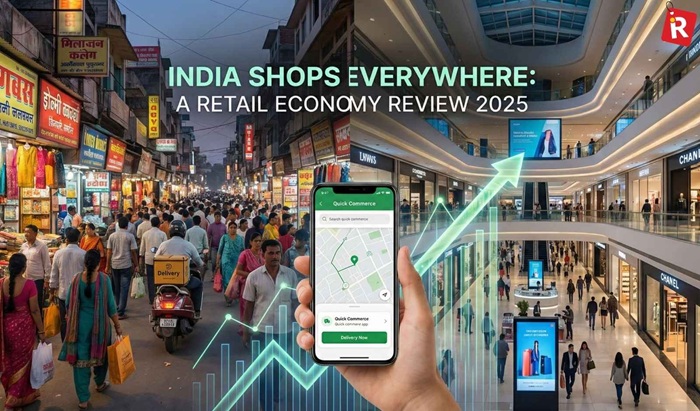
India’s 45°C economy is reshaping apparel retail and consumer spending
The intensifying heatwaves sweeping across the Indian subcontinent are no longer mere meteorological anomalies; they have become the primary engineers... Read more
FY26 Textile Scorecard: Integration, specialization are winning the margin battl…
As the curtains close on FY2025-26, India’s textile industry is revealing a sharp divide. On one side stand integrated and... Read more
Intertextile Shenzhen 2026: Pioneering the Future of Textile Innovation
As Shenzhen cements its status as China’s premier hub for manufacturing, artificial intelligence, and startup cultivation, Intertextile Shenzhen Apparel Fabrics... Read more