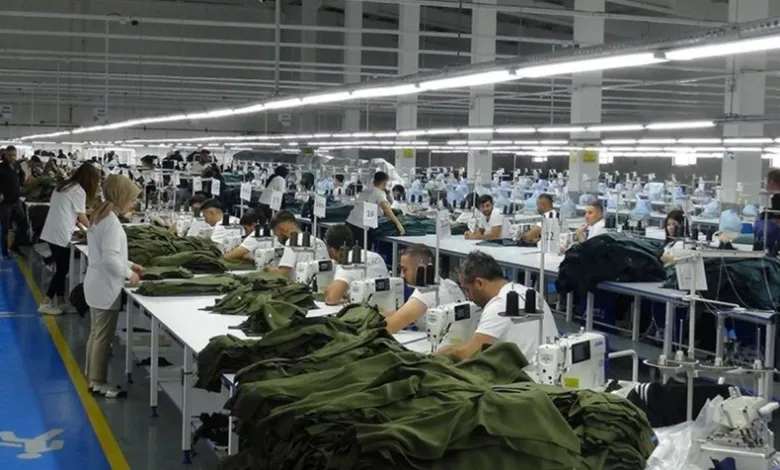
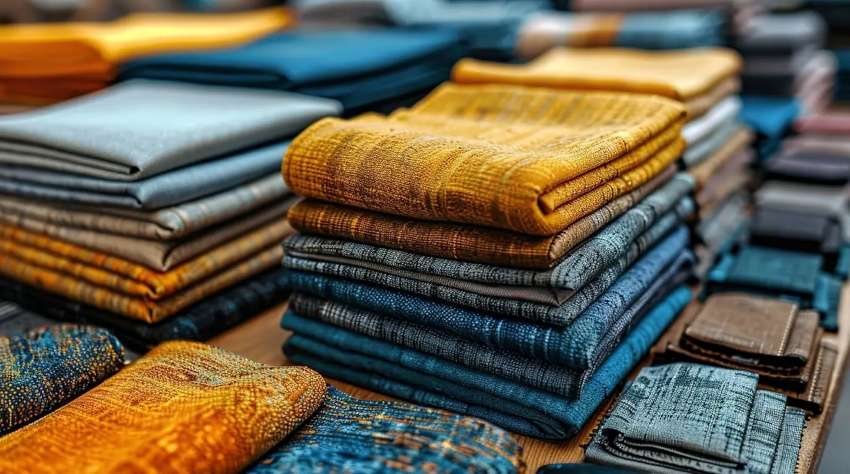
Egyptian textile industry has proven that it is more than up to the task, if only given the chance. According to the country’s central bank statistics, in the decade before Egypt’s 2011 uprising, cotton textile exports increased by about 19 per cent a year on average, having surged from US$108.9 million in 2001-02 to $628.0m by 2010-11.
Exports of ready-made clothes climbed almost as quickly, jumping 17.6 per cent a year, from $187.2m to $771.2m. Since the uprising this growth has come to halt, with exports of cotton textiles increasing by only 3.1 per cent annually in the four years to June 2015, and ready-made clothes by only 1.4 per cent. Textile exports actually contracted in the two years after July 2013, when Mohammed Morsi was removed from power and a degree of political stability was restored. Many smaller companies have shut down entirely.
To be sure, the overvalued pound has not caused all the problems, according to Mohamed Kassem, chairman of the Ready Made Garments Export Council of Egypt. The government raised the prices of electricity and natural gas in July 2014, with those paid by industry rising especially sharply. Labour and water bills also increased, and because of security concerns the government has made it harder to import many chemicals. All this has happened at a time when textile prices were falling around the world.
According to Kassem, the biggest problem remains that the strong pound is pricing Egyptian textiles out of the export market. The exchange rate is at the top of the list. Although the Egyptian pound was devalued against the dollar several times last year, since mid-2013 it has actually strengthened against the euro, the currency of one of Egypt’s main export markets. Meanwhile, the currencies of many of Egypt’s competitors have weakened, making their products more attractive.

- 1
- 2
- 3
- 4
- 5
- 6
- 7
- 8
- 9
- 10
China’s apparel retreat opens $60 bn gap, but India captures little
The biggest shift in global apparel sourcing over the past 15 years has produced an uncomfortable paradox for India. China... Read more
Global fashion bets big on India as consumer confidence leads world
Global fashion retailers are reassessing growth priorities as India moves away from the weaker consumer scenario prevailing across several mature... Read more
Turkiye’s textile crisis opens new frontiers for Egypt and South Asia
The suspension of production at Orta Anadolu’s spinning and weaving complex in Kayseri in mid-September, followed by its scheduled permanent... Read more
Europe cuts apparel volumes and prices, testing South Asian suppliers
European apparel sourcing entered 2026 under simultaneous volume and price pressure, forcing suppliers to absorb a decline that is reshaping... Read more
FICCI-TAG 2026: Mandatory reporting & Textile ID rolled out; Non-Compliance …
In a stern regulatory announcement aimed at creating a robust statistical backbone for India's textile sector, Textile Commissioner Vrunda Manohar... Read more
India’s apparel exporters face a new US tariff risk as margins shrink
The enactment of the Lindsey O. Graham sanctioning Russia and Iran Act of 2026 in Washington has introduced a fresh... Read more
Cellulosics challenge polyester dominance in global fibre market
The global textile raw-materials market has entered a phase where plant-based and regenerated cellulosic fibres have gain ground against fossil-fuel-derived... Read more
From cotton to MMF cost equation is rewriting global textile trade
The global textile and apparel trade has grown from $560 billion in 2006 to $914 billion in 2025, reveals the... Read more
Polyethylene stretch yarn challenges elastane’s hold on activewear
The global activewear, denim and intimate apparel markets have built a substantial business around stretch. But the same fibre combinations... Read more
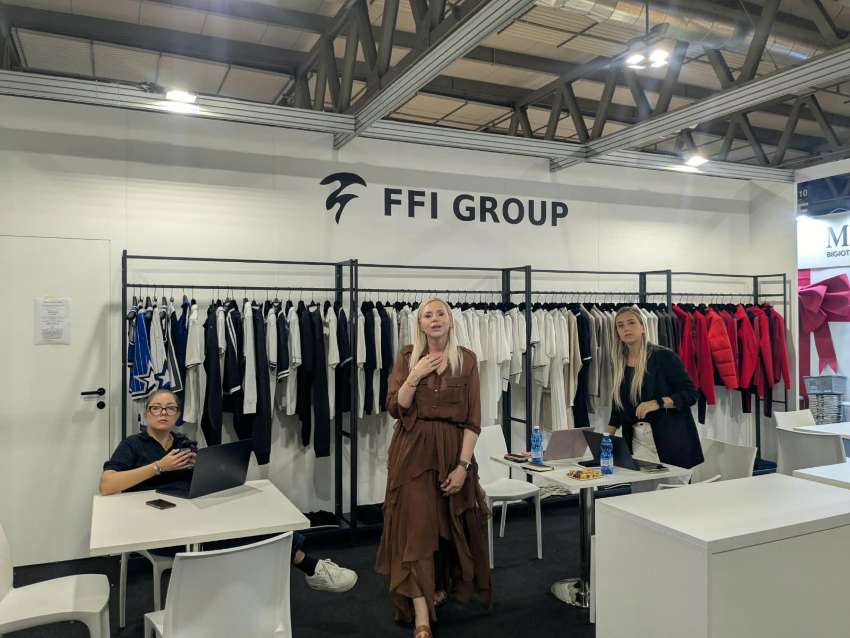
Automation Meets Italian Design: FFI Srl unveils ‘Next-Gen Robotics’ to help bra…
At the recently concluded autumn edition of Ready to Show inside Hall 10 at Fiera Milano-Rho—staged alongside the Milano Fashion... Read more