Cotton prices in India increased by 30 per cent year-on-year in the second quarter of FY ’17 and it is likely to have a negative impact on margins of apparel companies. EBDITA margins of Arvind, Page Industries, Kewal Kiran and Rupa are likely to decline 70 basis points, 108 basis points, 84 basis points and 100 basis points year on year respectively. However, Vardhman Textiles is an exception. Vardhman buys its yearly cotton requirement in March-April every year. Thus the company will report a margin expansion of 16 basis points year on year.
Revenue growth of apparel companies is likely to be moderate due to subdued consumer behavior at the retail level. Except for Page Industries and Kewal Kiran, all other companies in the coverage universe are likely to register single digit growth. Page’s revenue growth is expected to be driven by 17.2 per cent year on year volume growth and 5.4 per cent year on year realisation growth. Kewal Kiran, Arvind and Rupa are likely to register year on year revenue growth of 10 per cent, 9 per cent and 7 per cent respectively.
Cotton output in the country is expected to decrease by close to 10 per cent due to the white-fly attack on the crop in the northern states.
- 1
- 2
- 3
- 4
- 5
- 6
- 7
- 8
- 9
- 10
The £7 Billion Question: Who pays for fashion’s ‘free rental’ habit?
The global fashion industry is facing an uncomfortable paradox: its most valuable customers may also be its most destructive. A... Read more
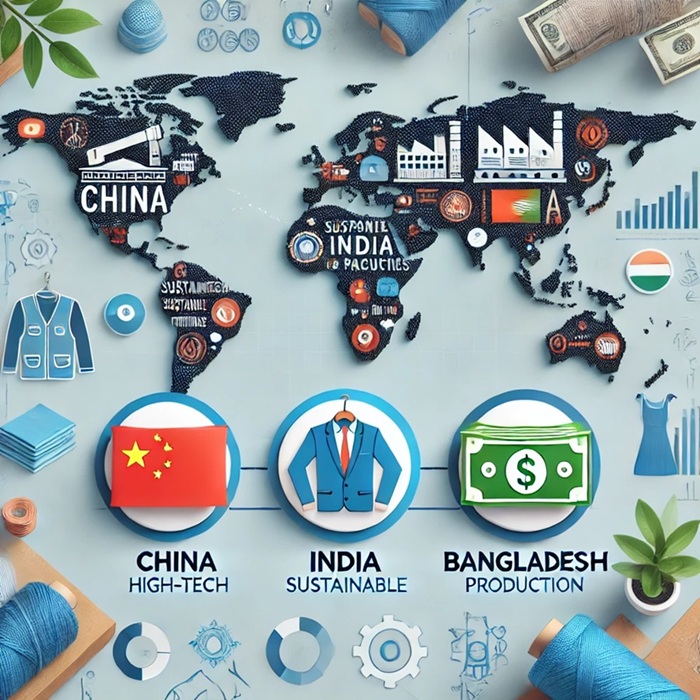
India, China Bangladesh face fresh headwinds as global apparel markets rebalance
Global apparel trade is entering a more uneven recovery phase, with demand growth persisting but losing uniform momentum across major... Read more
Global cotton enters a deficit year in 2026 as supply drop meets logistics risk
The global cotton economy has entered a fragile and sensitive phase. Early projections for the 2026-27 season suggest that world... Read more
India’s textile trade gets a Pacific push as New Zealand FTA removes tariff barr…
India and New Zealand have inked a ‘once-in-a-generation’ Free Trade Agreement (FTA), one that will have a profound impact on... Read more
Lululemon’s world-first nylon circularity push signals a new apparel arms race
The global apparel industry’s circularity narrative is entering a more technically demanding phase. Polyester recycling once the flagship of sustainable... Read more
Beyond the DTC Rush: Levi’s hybrid channel strategy sets a new retail benchmark
The global apparel sector is entering a phase where channel strategy is no longer a tactical lever but a core... Read more
The New Rules of Resale: EPR turning secondhand into fashion’s strategic growth …
The global fashion industry is facing a decisive regulatory and commercial reset. What began as a sustainability narrative around reuse... Read more
The 2027 Mandate: Why denim’s future hinges on verifiable data
For decades, the global denim industry has relied on a narrative of durability, heritage, and authenticity. That narrative is now... Read more
Europe’s textile core unravels as costs, imports and policy pressure bite
Europe’s textile and apparel sector, long seen as a benchmark for craftsmanship and industrial depth, is slipping into a prolonged... Read more
Automation, innovation, regulation are the forces shaping textiles in 2026
The global textile sector has entered a new era. Early 2026 saw the industry breach a $1.06 trillion valuation, reflecting... Read more