Cotton and garment waste are essential raw materials for Bangladesh’s terry towel, home textile and rotor spinning mills. But they are in short supply and are being exported instead. Export of garment waste increased 140 per cent in the first three months of the current fiscal year.
Textile mills produce some 150 million kg of cotton waste. Following the scarcity of raw materials, factories are unable to meet export orders and maintain lead times. Factory owners say exports of cotton waste should be stopped and high tariffs should be imposed to discourage exports.
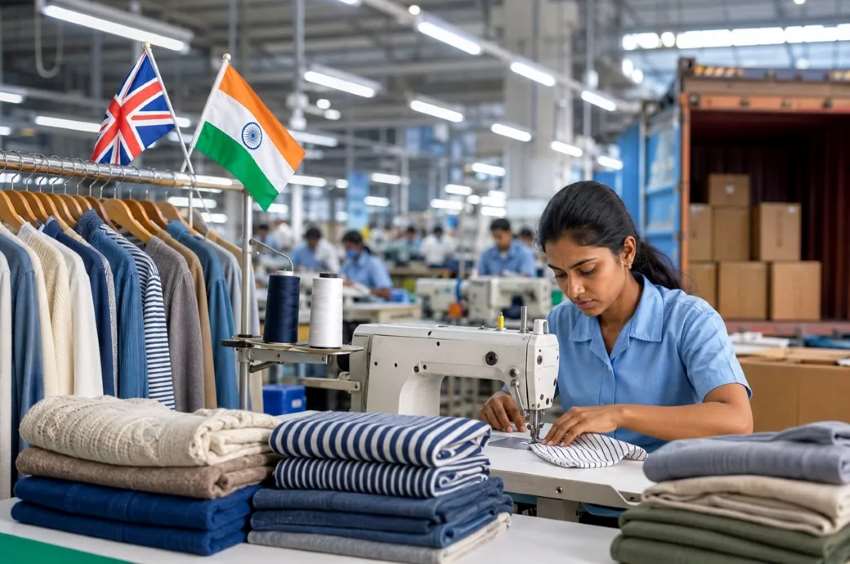
Some 110 home textile and terry towel factories create employment for some 65,000 workers in the country. Bangladesh’s rotor spinning mills produce yarn using cotton waste and similarly modern recycling mills produce another type of yarn using waste from readymade garments especially knit fabrics. These yarns are used in making terry towels, home textiles, denim and other types of clothing and exported to global markets fetching millions of dollars of foreign currency.
Denim mills for instance can't use their full production capacity due to a shortage of the required yarn. More than 26 denim mills across the country need 200 million kg of yarn to produce 400 million meters of denim fabric.

- 1
- 2
- 3
- 4
- 5
- 6
- 7
- 8
- 9
- 10
India’s $9 Billion Landfill Blind Spot How trashed clothes hold the key to globa…
A massive economic windfall is sitting uncollected in India’s landfills, and the key to unlocking it lies in rethinking how... Read more
Red Sea crisis reshapes textile trade routes, challenges India’s export margins,…
Global apparel trade is now in a new operational phase where geopolitical stability and logistics reliability are as important as... Read more
EU’s textile waste rules enter enforcement phase, raising alarms across fashion …
Europe’s apparel and textile industry is approaching one of its most significant regulatory transitions in decades. As the European Union... Read more
Corporate fashion adopts reverse logistics to unlock the $367 bn resale market
Global fashion retailers are rapidly changing their business models around resale, repair, and textile recovery as the secondhand apparel market... Read more
Tariff Shock 2026: Forced-labor enforcement is repricing global fashion trade
Washington’s latest trade intervention signals a break in the global apparel sourcing patterns. The Office of the United States Trade... Read more
Circular Samvaad 2.0 aims to transform Indian textiles from linear waste to glob…
On the occasion of World Environment Day, industry leaders, policymakers, and international experts gathered in the capital yesterday for Circular... Read more
From Sentiment to Sustainability: How Mumbai’s ‘Mega Post Textile Waste Initiat…
Walk into almost any Indian household, and you will find wardrobes harboring clothes that haven’t been worn in years. They... Read more
CMAI launches new initiative to combat waste and formalize textile recovery acro…
In a landmark move to address the mounting crisis of post-consumer textile waste, the Clothing Manufacturers Association of India (CMAI)... Read more
Trends-Fabrics (Denim-Kidswear) trends for Spring/Summer 2026-27 by Drapers
For the Spring/Summer 2026-27 season, the kidswear denim market is defined by a shift toward lightweight comfort, playful aesthetics, and... Read more
Cost spiral across fibers, chemicals and logistics squeezes India’s apparel expo…
India’s textile manufacturing sector has entered one of its most financially strained periods in recent years as increasing fiber, yarn,... Read more