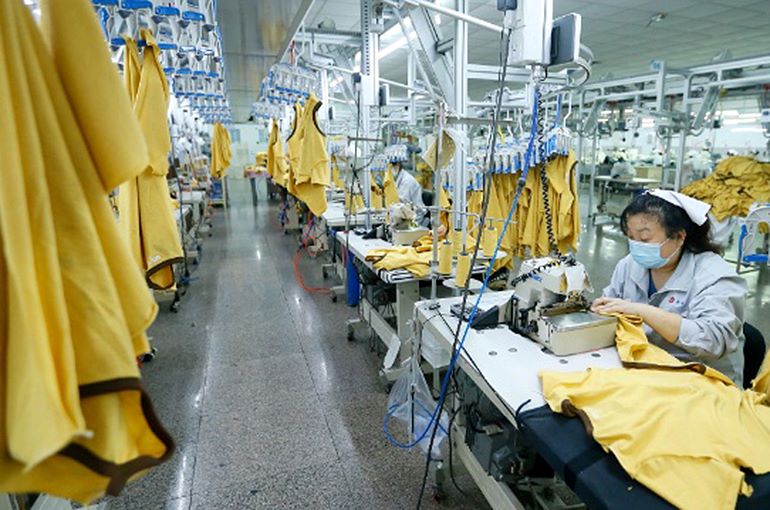
About 2.5 million workers in India’s leather industry toil and suffer. They work long hours with toxic chemicals for poverty wages, making shoes and clothes for western brands. Leather industry hubs like Agra, Tamil Nadu and Kolkata supply hides, leather, garments, accessories and footwear for export.
Employment is created through the growth of large-scale export centers. But accidents regularly occur. Machine operators get trapped. Workers cleaning underground waste tanks suffocate from toxic fumes or drown in toxic sludge at tannery premises. The workers include women and children.
In small, unregulated factories, workers have no social security cover such as state health insurance or pension and earn a tiny fraction of the products' global price. India is the world’s second largest producer of footwear and leather garments and almost 90 per cent of India's footwear exports go to the European Union.
Tannery workers often suffer fever, eye inflammation, skin diseases and cancer as they work with toxic chemicals and rarely have any safety training or protection. Dalits and Muslims make up the majority of the workforce. It’s necessary for brands to increase the traceability and transparency of their supply chains up to the level of tanneries and subcontractors.
- 1
- 2
- 3
- 4
- 5
- 6
- 7
- 8
- 9
- 10
The second life economy gets a boost as resale outgrows traditional apparel reta…
For decades, resale existed in the margins of the apparel economy, thrift stores, peer-to-peer marketplaces, and charity bins quietly absorbing... Read more
Rising polyester costs shake India’s textile manufacturing hubs
India’s synthetic textile industry is confronting a sudden and destabilizing price shock that is reverberating across its vast manufacturing ecosystem.... Read more
Cotton markets hold firm as tariffs, higher supply reshape global fiber economic…
In a year marked by tariff escalations, geopolitical brinkmanship and a recalibration of global trade flows, the international cotton market... Read more
Beyond Cotton How Kapok could redefine sustainable insulation in textiles
In the lush, humid heart of Southeast Asian rainforests stands a giant, a silent sentinel of the forest canopy. Growing... Read more
Bharat Tex 2026: Redefining the global textile value chain
Union Minister of Textiles, Giriraj Singh, has officially unveiled Bharat Tex 2026, signaling a significant leap in India’s influence over... Read more
Intertextile Shanghai Spring 2026: A hub for global textile innovation
The textile industry’s pulse is quickening as Intertextile Shanghai Apparel Fabrics – Spring Edition prepares to open its doors from... Read more
Moscow Fashion Week 2026: Blending sustainable innovation with timeless glamour
Scheduled to run from March 14-19, 2026 in Moscow, Russia, the Moscow Fashion Week (MFW) is cementing its status as... Read more
The Store as Stage: How fashion is crafting immersive consumer worlds
The North American fashion retail sector in 2026 is shedding its product-first identity and shifting towards a model that values... Read more
Turning the supply chain upside down, on-demand production reshapes apparel
The global fashion industry, long celebrated for its creativity and scale, is facing a structural reckoning. For decades, retailers and... Read more
Intertex Milano 2026 - A global nexus for textile innovation
Intertex Milano is set to return this summer, confirming its status as a premier international destination for the textile and... Read more