Spain’s textile sector is coming out of the recession.
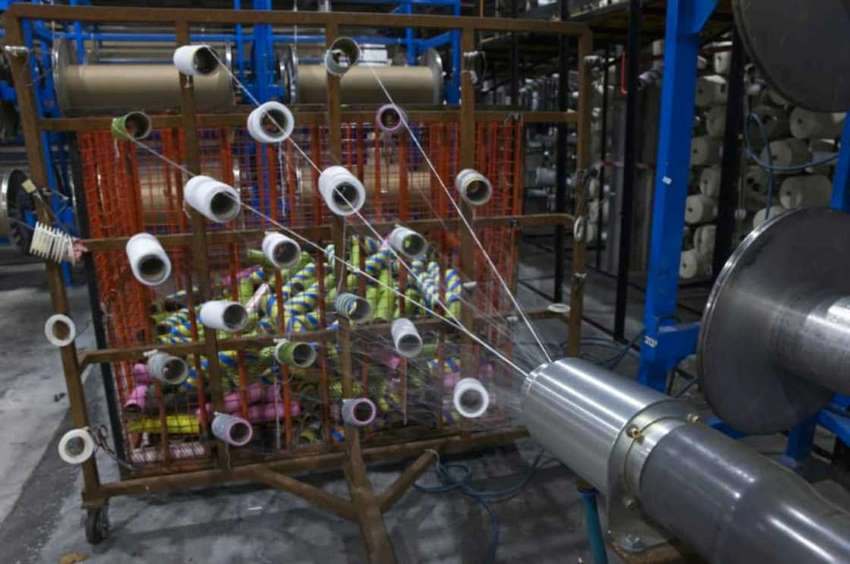
The number of Spanish suppliers of fabrics, fibers and accessories such as buttons had plunged by about a third since 2008. Spanish textile firms were slow to innovate and adapt to the increasingly fast-changing demands of the fashion industry.
Many company bosses in the sector still have a mentality of industrialists, not of entrepreneurs. But last year, the number of textile firms stopped falling for the first time since 2008, stabilising at around 3,500 companies. The sector is benefitting from Spain's economic rebound - growth stood at 3.2 per cent in 2016, double the eurozone average -- and the disappearance of less competitive firms. The firms that survived were those that were export-oriented, able to diversify their order book and respond more quickly to customers' demands.
Spain's textile exports, which account for 60 per cent of sector-wide sales, rose by seven per cent last year. The focus on international sales adopted by major fashion retailers has also pushed smaller firms to modernise and shift their focus to activities with higher added value.
Companies have also diversified away from fabrics destined only for fashion and now also make technical fabrics for the automobile, agriculture or sports sectors.

- 1
- 2
- 3
- 4
- 5
- 6
- 7
- 8
- 9
- 10
Inside activewear's shift from stitched mesh to precision engineered textiles
The global functional apparel market, on track to touch $640 billion, is looking at a production shift as activewear manufacturers... Read more
Brazil’s cotton dominance puts Asian spinners on a new sourcing map
Brazil’s emergence as the world’s largest cotton exporter is no longer simply an agricultural success story. It has given a... Read more
Textile industry sees long-term growth but $100-bn export goal stays a stretch: …
India’s textile and apparel industry is entering a phase of optimism, but that confidence is tempered by a hard export... Read more
Apparel trade slumps as global textile mills move upstream
Global manufacturing is growing, but finished apparel is failing to capture that growth. United Nations Industrial Development Organization (UNIDO) data... Read more
Global apparel value chain converges in Shanghai as Intertextile Autumn 2026 ope…
The global apparel and textile community gathered in full force yesterday, August 25, 2026, as the Autumn Edition of Intertextile... Read more
Trade pacts, integrated manufacturing power India’s textile export ambitions
Global apparel sourcing is entering a new phase in which resilience, compliance and manufacturing depth matter as much as cost... Read more
Next-gen digital Indigo systems redefine textile manufacturing economics
The global textile sector is experiencing a structural shift as industrial-scale digital dyeing technologies replace traditional indigo vats in major... Read more
Fashion retail’s physical comeback, stores become experience hubs
Online shopping has permanently altered fashion consumption, making convenience, algorithmic recommendations, endless assortment and doorstep delivery standard expectations. Yet the... Read more
India reworks apparel export strategy as US tariffs squeeze margins
As tariff volatility, shorter retail buying cycles and aggressive price negotiations in the US expose weaknesses in the country’s traditional... Read more
MIT’s recyclable yarn could disrupt spandex’s grip on fashion
Stretch has become essential to modern fashion. Activewear, denim, underwear and athleisure all depend heavily on elastic fibres such as... Read more